
"coffee harvesting prep"
146000 article(s) found

Nicaraguan coffee ripe but no one harvests climate change pressure motivates local workers to choose to emigrate
Professional coffee knowledge exchange more information about coffee beans Please follow the coffee workshop (official Wechat account cafe_style) in January the coffee harvest season in Matagalpa, Nicaragua has begun, but many farms do not have workers to harvest it. A Nicaraguan grower said: the fruit is ripe, but most of it can only fall to the ground. Mining in Nicaragua in recent years

The harvest method of fine coffee varies from place to place.
The harvest time and method of coffee vary from place to place, generally speaking, once or twice a year (sometimes up to three or four times). The harvest time is mostly in the dry season. In Brazil, for example, around June, it starts in the north-eastern state of Bahia and ends in October in the southern state of Parana. The harvest period of Central American countries is from September to next year.

The basic situation of Coffee Tree planting Coffee harvesting and processing
Timely harvest is an important link to ensure high coffee yield and improve product quality. The standard of harvest varies with different varieties: the harvest time of small seed coffee is more concentrated, and the fruit can be harvested when the fruit turns red, and it should be picked with ripening. If the fruit turns red completely, the fruit is easy to fall off. The harvest time of medium-and large-grain coffee is longer, and it can wait until more fruits are red or purple.
The mode of picking coffee fruit during the harvest period.
Professional coffee knowledge exchange more information about coffee beans Please follow the coffee workshop (Wechat official account cafe_style) depending on the variety, it takes about 3 to 4 years for newly planted coffee trees to bear fruit. The fruit, called coffee cherry, turns bright crimson when it is ripe for harvest. There is usually a bumper harvest every year. In a country like Colombia,

How to harvest coffee can be divided into two categories
Harvesting methods can be divided into two categories, one is hand picking method, the other is shaking method. (1) hand picking is used in most Arabica coffee producing countries except Brazil and Ethiopia. Hand picking is not only to pick the ripe bright red coffee fruit, but also to pick it together with the immature cyan coffee fruit and branches, so these immature beans are often mixed with refined beans.

Champion of 2018 African harvest monsoon cup test contest _ Ethiopian Gujiuluoga Lucy Coffee
Professional coffee knowledge exchange more coffee bean information please follow the coffee workshop (Wechat official account cafe_style) Ethiopia Guji Uloga Luci G1 Ethiopia Guji Uraga Lucy Washed G1 2018 African harvest monsoon cup test champion! Taste of Harvest (TOH) Harvest Monsoon Cup Test Competition is held by the African Coffee Association African Fin

There are three main ways to harvest coffee beans, coffee and cherries.
Professional coffee knowledge exchange more coffee bean information please follow the coffee workshop (Wechat official account cafe_style) Coffee Cherry ripening season is mostly from June to August in Arabica and from September to October in Robusta. For coffee quality and flavor, coffee cherry harvest is a very critical step, the subsequent stages can only maintain, can not improve the quality and flavor of coffee.
Coffee harvest is a mixture of joys and sorrows.
Most of the major coffee-producing countries have a bumper harvest, which is supposed to be a blessing for coffee consumers around the world, but some people are happy and others are sad: there is nothing happiest than coffee retailers (because of the sharp reduction in costs.) and coffee lovers (retail prices are expected to fall, the market choice is flat and beautiful); but the biggest worry is of course a large number of coffee farmers (because prices have plummeted, even lower than the cost).

Coffee bean hand-picking method Colombian planting Colombian coffee beans Colombian picking
The harvest time and methods of coffee harvest vary from place to place, generally speaking, about 1-2 times a year, sometimes up to three or four times. The harvest time is mostly in the dry season. In Brazil, for example, around June, it starts from Basiya in the north-east and ends in Parana in the south around October. The harvest period for Central American countries is from September to January of the following year.

What are the factors that affect coffee quality?
The annual coffee harvest period, for example in El Salvador, is from November to February to March of the following year, which is a dry and cold season, which is very suitable for picking coffee fruits, but all of this will be variable due to rainfall. The author was in El Salvador at the time of writing and witnessed the dramatic changes brought about by rainfall. The flowers on the coffee trees bloomed when the workers harvested them. Br
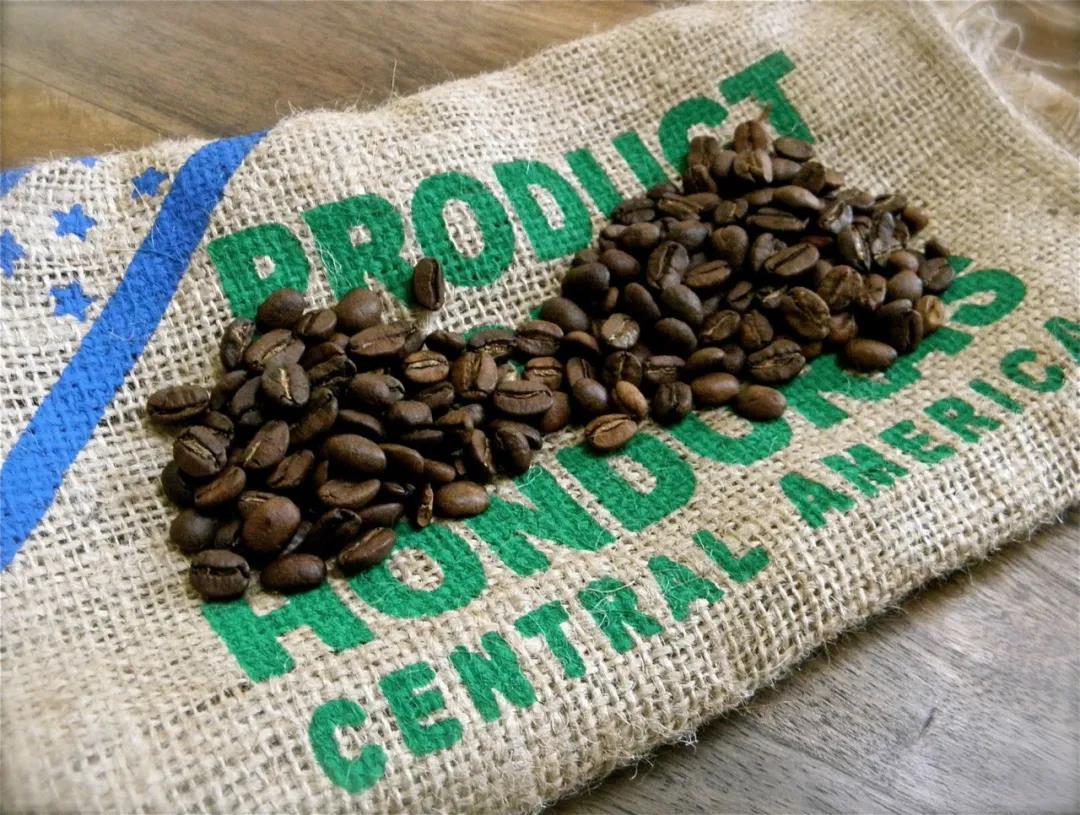
COVID-19, hurricane, leaf rust triple blow? The coffee harvest in Honduras is in jeopardy in the new season
Professional coffee knowledge exchange more coffee bean information please follow the coffee workshop (Wechat official account cafe_style) Honduras National Coffee Institute (IHCAFE) said: Honduras 2020 / 2021 harvest season coffee exports forecast to decline by about 11%, due to the global epidemic has not been well controlled, coupled with the recent heavy rainfall caused by Hurricane ETA in Central America caused losses

In the process of coffee cultivation, coffee is grown with seeds with endocarp.
In the process of coffee cultivation, some people mistakenly think that coffee is grown directly with raw beans, but it takes a long time to grow but find that it does not sprout. In fact, coffee is grown with seeds with endocarp (Parchment). The inner fruit (or sheepskin or paper parchment) refers to the tea-brown hard skin that wraps the coffee seeds, and the coffee beans attached to that layer are called Parchment Bean. Dial

The cultivation process and sowing of Coffee in Yunnan & does #160; Coffee belong to Arabica?
People often mistakenly think that coffee is grown directly with raw beans, but it takes a long time to grow coffee only to find that it doesn't sprout. In fact, coffee is grown with seeds with endocarp (Parchment). The inner fruit (or sheepskin or paper parchment) refers to the tea-brown hard skin that wraps the coffee seeds, and the coffee beans attached to that layer are called Parchment Bean. Put aside the full maturity
Cameroon achieved a total output of about 20, 000 tons of coffee beans in the coffee harvest year 2013-2014
According to the Investment Cameroon website on November 3, the 2013-2014 coffee harvest year in Cameroon ended at the end of September 2014. according to the Cameroon National Office for Cocoa and Coffee (ONCC), the total coffee bean production in the 2013-2014 coffee harvest year was about 20, 000 tons (of which Rob beans accounted for 95% of the total production), a decrease of 5000 tons from the last coffee harvest of 25000 tons. Out

Brazilian coffee beans will have a bumper harvest this year, but their prices have plummeted.
Professional coffee knowledge exchange more coffee bean information please follow coffee workshop (Wechat official account cafe_style) Brazilian coffee flavor characteristics manor producing area _ Brazilian boutique coffee after years of soaring coffee bean prices in Brazil, many cash-rich farmers have expanded their investment in growing coffee beans, but at the time of this year's harvest, coffee beans are expected to have a bumper harvest.

The basic knowledge of coffee beans the harvest time and treatment of coffee beans
Harvesting and handling harvests take place in different months of the year (depending on the geographical location of the producing country), depending on the maturity of the fruit. The harvest time depends on the geographical location, climate and altitude, and varies according to the situation of each producing country. Ripe fruit can be picked by hand, or raked with a small rake, or hit to the ground with a pole: the first two ways can use low-cost labor

Understand the way coffee is harvested
Professional coffee knowledge exchange more coffee bean information Please follow the coffee workshop (Wechat official account cafe_style) to learn to brew coffee is not just to learn the techniques of coffee, for the variety of coffee beans, the characteristics of coffee beans and ways, etc., need to be carefully studied and understood. Only in this way can you master every step of learning to make coffee.

Characteristics of Kenyan Coffee picking season manor flavor description introduction of varieties in taste producing areas
Characteristics of Kenyan coffee picking season manor flavor description varieties in different regions, the harvest time of coffee varies from region to region. Regions north of the equator (such as Ethiopia and Central America) are generally harvested from September to November. South of the equator, such as Brazil and Zimbabwe, although the harvest can last until August, the main one is in April or May.
Coffee beans harvesting Coffee beans harvesting
Coffee beans are the seeds of coffee trees. After three to four years of growth, coffee trees mature and begin to bear fruit, one fruit after another arranged in clusters or clusters along the branches. The seed is covered with a peel that can be picked as soon as it turns red. Below the red skin (exocarp) is a layer of flesh (mesocarp), inside is a small thin layer, and further inside is a layer like parchment

Is the harvest time of Central American and Indonesian coffee beans the same as Colombian coffee in South America?
Generally speaking, the Central American producing region of the Northern Hemisphere or Aceh in Indonesia is the busiest harvest and post-production period in February and March every year, so the beans can be shipped to the consuming countries in May-October every year; Brazil in the southern hemisphere is the busiest harvest and post-harvest period every year from June to July, and the beans can arrive from September to April of the following year. Because of